


Read our AgLetter Insights Q&A with author David Oppedahl for further insights into Seventh District farmland values and agricultural credit conditions described in this issue of AgLetter.
Farmland values
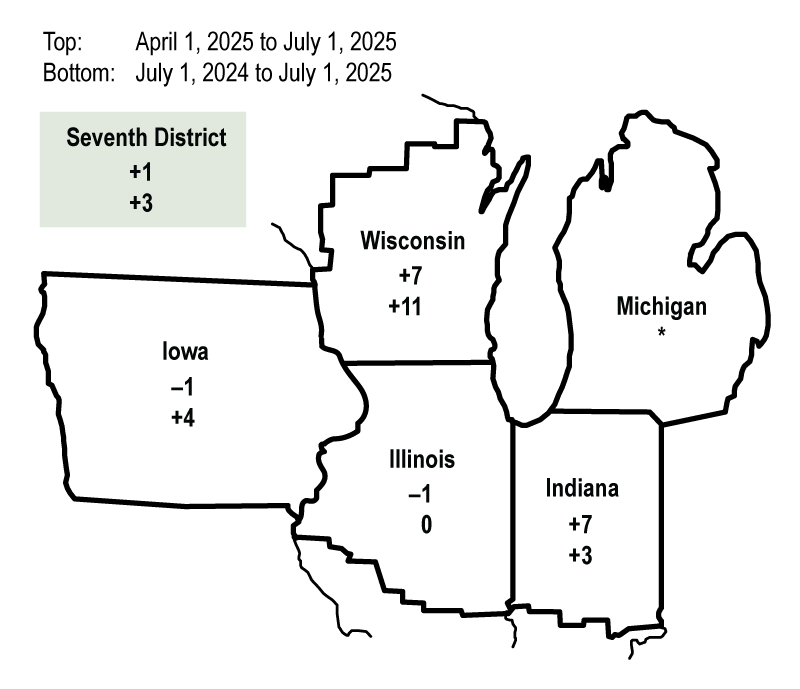
Farmland values for the Seventh Federal Reserve District rose 3% in the second quarter of 2025 from a year earlier, marking the largest year-over-year gain since the first quarter of 2024. Values for “good” agricultural land were 1% higher in the second quarter of 2025 relative to the first quarter, according to survey responses from 98 District agricultural bankers. Indiana, Iowa, and Wisconsin agricultural land values exhibited year-over-year increases of varying degrees; meanwhile, Illinois farmland values were unchanged on a year-over-year basis (see figure 1). In real terms (after being adjusted for inflation with the Personal Consumption Expenditures Price Index, or PCEPI), there was a year-over-year increase of 1% in District agricultural land values. This was the first positive year-over-year change in real farmland values for the District since the first quarter of 2024. Indiana and Wisconsin bankers cited real estate development as contributing to higher farmland values. For Indiana, there was also mention of investment activity, including solar and wind projects, factoring into rising agricultural land values.
1. Percent change in dollar value of “good” farmland
Midwest Agriculture and Trade Uncertainty
On September 30, 2025, the Federal Reserve Bank of Chicago will hold a hybrid event to explore interrelationships between Midwest farming and agricultural trade. Registration for the annual Midwest Agriculture Conference is available online.


